
Run the plan on screen first
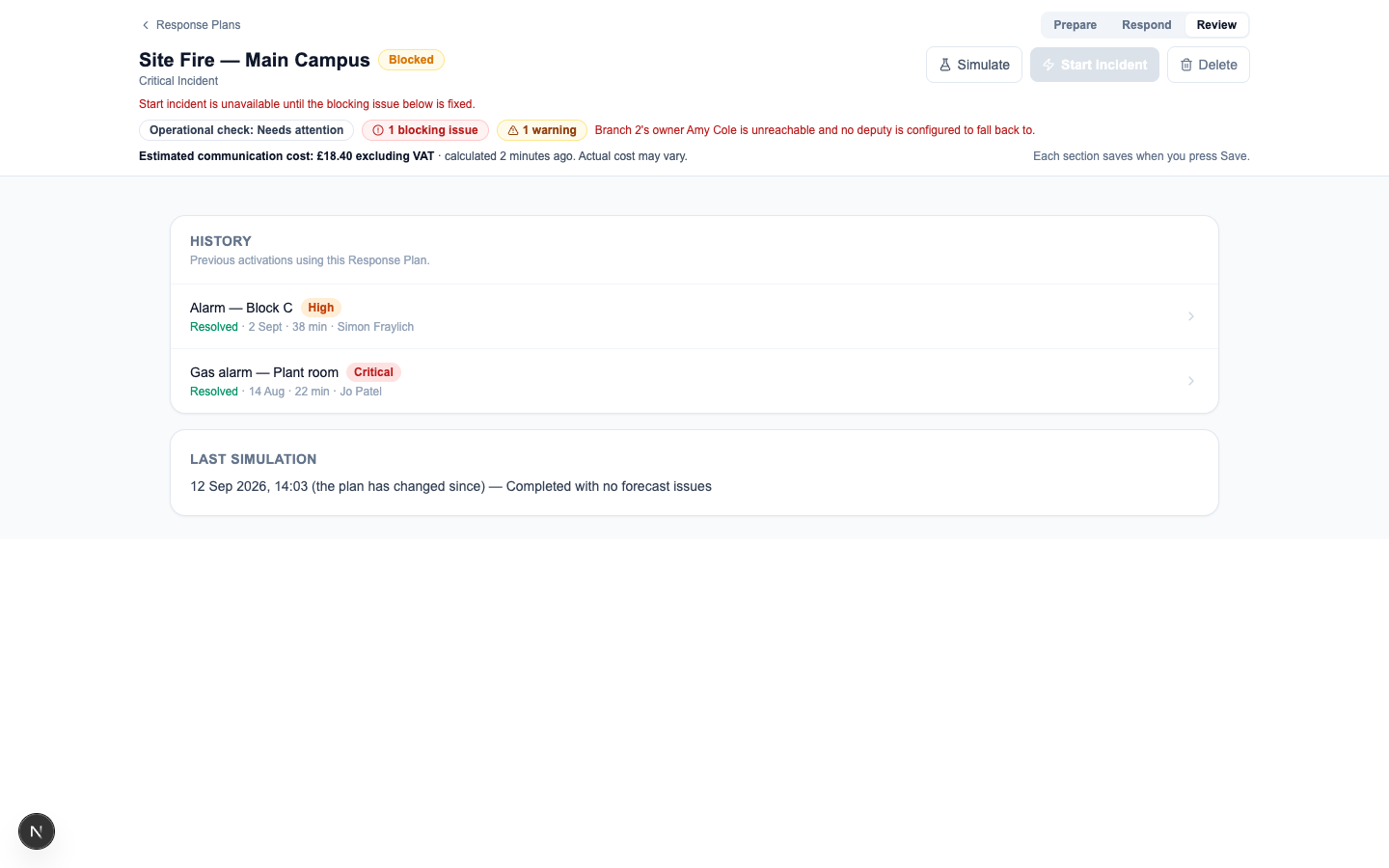
Open the response plan and select Simulate. Follow the displayed journey from the Incident Lead through mobilisation, responders and recovery. Confirm that the order matches the decisions your team has made.
- Check who is called first.
- Check whether branches start together or in sequence.
- Check who owns each branch and which members follow.
- Check timeouts and fallback routes.
- Review the estimated communication cost.
Treat warnings as plan defects
If StrikeGrid reports a missing role, incomplete route or contact issue, return to the plan or People page and correct it. A warning may not always block activation, but it should be understood and accepted rather than ignored.
Follow with a controlled live exercise
An on-screen simulation does not place real calls. When appropriate, run a controlled exercise with the people involved so they recognise the caller, understand the acknowledgement prompt and know what joining the coordination call means.
Tell participants that the exercise is a test, agree how it will be stopped and keep emergency procedures available throughout.
Review what actually happened
After an activation, use Review to inspect the incident history and contact outcomes. Look for unavailable people, unexpected escalation, confusing ownership and any point where the response relied on knowledge that was not in the plan.
Update the people or plan while the findings are still clear, then simulate it again. The useful outcome is a better response route, not simply a completed test.