
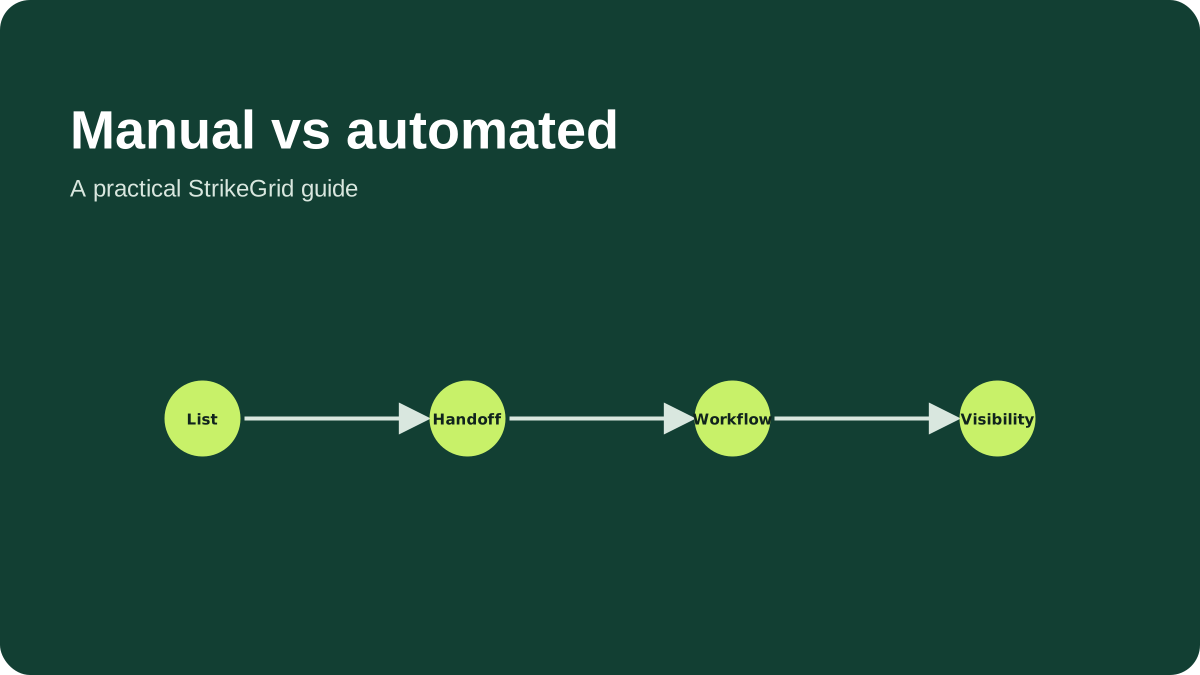
What the distinction means in practice
Automation is strongest for repeatable escalation, distributed teams and auditable handoffs. Manual coordination can be appropriate for small, novel events where the response lead already knows the available people and needs flexibility.
A good plan makes the current operational state visible: who has been attempted, who acknowledged, which tier is active and who now owns the next decision. Delivery receipts alone are not a substitute for that shared understanding.
A practical example
Imagine an out-of-hours failure affecting a staffed site. The first tier calls the duty operational lead and technical responder. If the configured response condition is not met, a second tier adds the regional manager and specialist supplier. People who acknowledge join a coordination conference, while stakeholders receive only the updates relevant to them.
The organisation still needs trained decision-makers, emergency procedures and alternatives for communications failure. The platform reduces repetitive calling and record keeping; it does not decide what the team should do.
Design the plan around roles and decisions
Start by writing down the decisions that must be made during the first fifteen, thirty and sixty minutes. For each decision, identify the role with authority, the specialist input that role needs and the person who covers an absence. This usually produces a shorter and more useful response route than importing every name from a departmental directory.
Keep response roles separate from interested stakeholders. A responder is expected to acknowledge and take part in the operation. A stakeholder may only need a status update. Mixing the two groups can make it appear that a response threshold has been met when the people with the required authority or expertise are still missing.
Use tiers to express operational dependency. The first tier should contain the minimum viable response, not simply the most junior staff. Later tiers can add management, specialist or supplier support. Document the reason for each timeout: travel, safe access, duty arrangements and incident severity may all affect what is realistic.
Plan for failure and accessibility
Every communication channel has failure modes. Calls may be screened, mobile networks may be congested, devices may be out of coverage and messages may be delayed. A sound plan combines channels, explicit acknowledgement and a separately accessible fallback list. It also states when the incident lead should stop waiting for the system and use an alternative route.
Accessibility should be designed in rather than handled as an exception during an incident. Confirm whether each responder can receive and act on a voice call and keypad prompt. Provide another acknowledgement method where needed, keep spoken and written language plain, and avoid relying on colour, sound or a particular smartphone application as the only signal.
Treat contact data as operational data with an owner and review cycle. A technically successful call to an obsolete number is still an operational failure. Verification, duty handover and prompt removal of leavers matter as much as the escalation engine.
Measure the process without gaming it
Useful measures describe the health of the response process: attempts until the required roles acknowledged, time to a meaningful acknowledgement, escalations caused by unavailable or incorrect contacts, and plan changes identified after review. A fast delivery receipt is not evidence that the incident was understood or owned.
Review both real activations and exercises. Ask where the team hesitated, which role was unclear, whether the message contained enough context and whether anybody joined without understanding the expected action. Record improvements against a named owner and due date. Avoid publishing target claims until the organisation has enough reliable data and a clear definition of each measure.
When evaluating software, ask to see how failures appear in the live view and final timeline. Normal operations include no-answer, busy, unreachable, declined and provider-error states. A useful platform exposes uncertainty instead of turning every attempted communication into a success statistic.
Repeat the review when teams, sites, suppliers or risk assumptions change. A response route is a maintained operational control, not a document that becomes dependable merely because it has been approved once.
Implementation checklist
Use this checklist during plan design and review.
- Name the accountable plan owner and activation authority.
- Define what counts as acknowledgement and when escalation continues.
- Verify contact methods and coverage on a regular schedule.
- Exercise absence, network disruption and incorrect-data scenarios.
- Review the timeline and update the plan after every real or simulated activation.
Questions to ask a supplier
A balanced design often keeps automation for initial reach and acknowledgement, human leadership for decisions, and a documented offline calling list for technology failure.
- Which capabilities are live today and which are roadmap items?
- How are acknowledgement, no-answer and failure represented?
- Can we test a plan and export or review the timeline?
- What roles and permissions control plans and activations?
- Where is data processed, and which subprocessors handle communications?
- How are communication usage and support priced?
Direct answers
Does automation replace an incident lead? No. It executes prepared communications and presents status; people retain operational authority.
Is a delivered message the same as acknowledgement? No. Acknowledgement should be an explicit, recorded action.
Does software guarantee compliance or response time? No. Outcomes depend on plan design, people, networks, suppliers and the incident itself.
Should a team keep an offline fallback? Yes. Every critical communications plan needs an alternative route for platform or telecommunications disruption.