
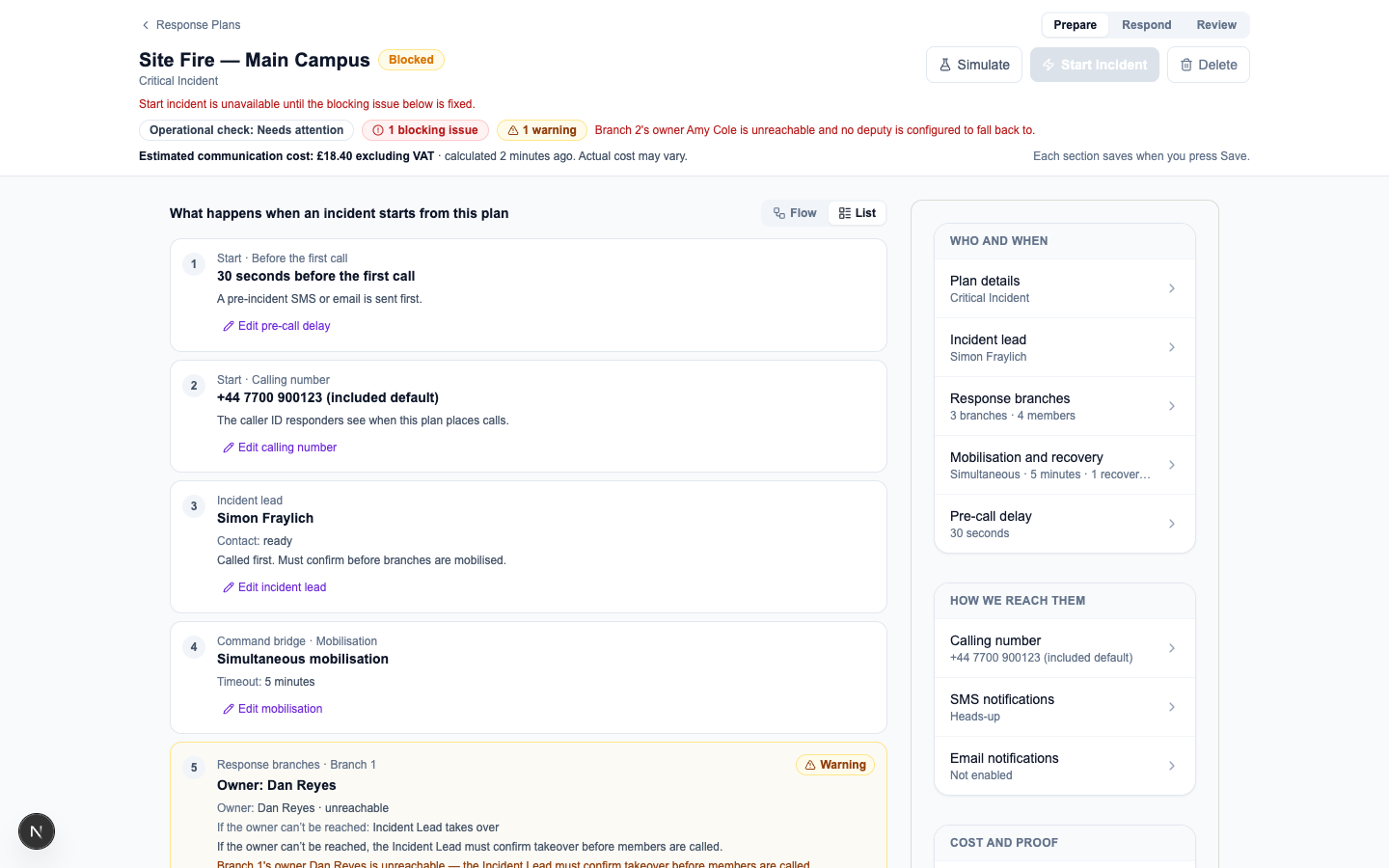
Start with the Incident Lead
Choose the person who should receive the first call and take initial control. The Incident Lead must acknowledge before the rest of the response begins. This prevents a plan from mobilising everybody without anyone clearly owning the incident.
Choose how responders join the response
Direct responders join the coordination call without a Branch Owner. Branches are useful when part of the response needs its own owner and members. Use the structure that matches how your team actually works rather than adding branches simply because they are available.
- Use direct responders for a small response team.
- Use branches when different workstreams need named owners.
- Set a fallback for a Branch Owner who does not answer or declines.
- Keep the response route short enough to understand at a glance.
Check the journey before relying on it
The Prepare view shows the calling journey in order. Open each step to check the person, mobilisation method, timeout and fallback. StrikeGrid highlights gaps that would prevent the plan from running and warnings that deserve review.
A plan can reduce repetitive calling and make progress visible, but no connection is guaranteed. Keep an alternative route for a platform, provider, network or device failure.
Before you finish
Confirm the following with the people named in the plan.
- The Incident Lead understands the acknowledgement step.
- Each Branch Owner knows the members they are responsible for.
- Timeouts allow enough time to answer without holding up the response.
- Fallback routes reflect real authority and availability.
- The estimated communication cost has been reviewed.